
A vapor recovery unit is a system designed to capture, treat and recover hydrocarbon vapors generated during storage, loading or unloading operations of liquid products.
These vapors can be generated in storage tanks, truck loading racks, railcar loading, marine terminals, oil tankers and other product transfer operations.
SETI provides vapor recovery solutions for hydrocarbon terminals, fuel terminals, chemical products and port operations, supporting technical specification, supply, installation, commissioning and after-sales support according to the operating conditions of each facility.
Vapor recovery units are used in terminals, refineries, industrial plants and logistics operations where it is necessary to reduce VOC emissions, improve operational safety and recover hydrocarbon vapors for reuse or treatment.
They can be applied in truck loading, railcar loading, ship loading, barge loading, storage tanks, fuel terminals, chemical plants and product transfer systems.
Correct specification makes it possible to adapt the unit to the type of product, vapor flow rate, composition, temperature, pressure, applicable environmental regulations and terminal safety requirements.
Complete our technical form or contact us by WhatsApp for an initial project review.
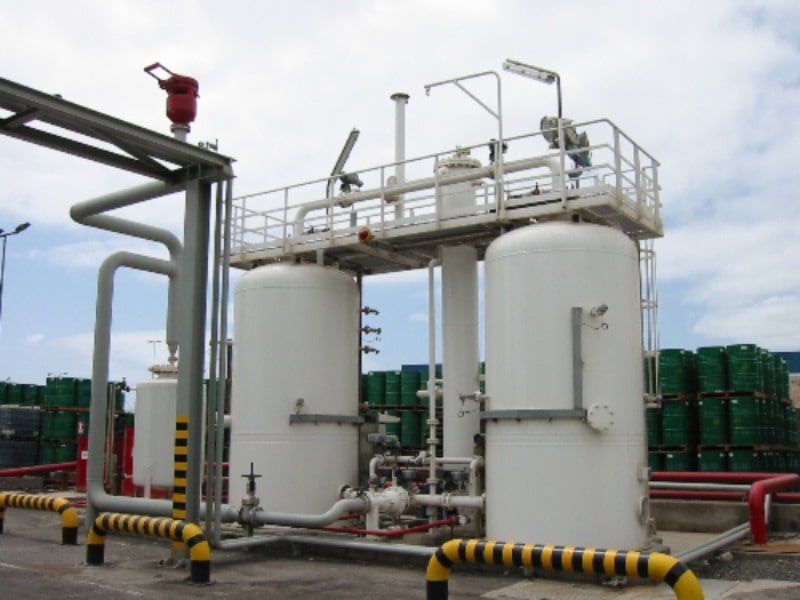
A common technology for vapor recovery uses activated carbon beds to adsorb the hydrocarbons present in the vapor stream.
During operation, the vapors enter the system and the volatile organic compounds are retained in the activated carbon. The system then regenerates the carbon to recover the hydrocarbons and allow continuous or cyclic operation, depending on the unit design.
The selection of the technology must consider the type of product, vapor concentration, flow rate, required emission limits, expected efficiency and operating conditions of the facility.
In activated carbon-based systems, vacuum regeneration makes it possible to extract the hydrocarbons adsorbed in the bed and recover the vapors for subsequent condensation, absorption or reintegration into the process.
This type of technology makes it possible to improve system efficiency, reduce emissions, extend the service life of the activated carbon and optimize energy consumption compared with less efficient solutions.
The final configuration may include vacuum pumps, an absorption or reabsorption column, control systems, instrumentation, safety valves, temperature monitoring and specific accessories according to the project scope.
A vapor recovery unit can include different components depending on the selected technology and the operating conditions.
Common components may include:
Safety is a critical aspect in any vapor recovery system, since the treated vapors may form flammable or explosive mixtures depending on the product and operating conditions.
For this reason, the unit must be designed considering area classification, detection systems, isolation valves, temperature monitoring, alarms, safety instrumentation, overpressure protection and safe operating criteria.
The selection of components must be carried out considering the product handled, environmental conditions, applicable regulations and the terminal’s safety philosophy.
One of the main objectives of a vapor recovery unit is to reduce emissions of volatile organic compounds, VOCs, generated during storage and transfer operations of hydrocarbons.
Vapor recovery makes it possible to reduce the environmental impact of the terminal, reduce product losses, improve regulatory compliance and protect the health of personnel, neighbors and visitors exposed to potentially hazardous vapors.
In many projects, the VRU also contributes to improving the environmental image of the operation and meeting increasingly demanding emission requirements.
The installation of a vapor recovery unit makes it possible to reduce VOC emissions, recover product, improve operational safety and comply with environmental requirements applicable to hydrocarbon terminals, chemical plants and loading operations.
It also helps protect personnel health, reduce odors, limit exposure to hazardous vapors and improve the operational continuity of the facility.
In terminals with high loading frequency, the system can represent an important improvement in environmental efficiency, safety and product recovery.
Vapor recovery units can be integrated with truck loading systems, truck loading arms, Marine loading arms and internal floating roofs.
Correct integration makes it possible to capture vapors at the point of generation, conduct them safely to the VRU and ensure that the system operates in coordination with loading or unloading maneuvers.
In marine operations, vapor recovery can form part of a broader environmental control and safety strategy, together with loading arms, communication systems, monitoring and terminal operating procedures.
A vapor recovery unit is a system designed to capture, treat and recover hydrocarbon vapors generated during storage, loading or unloading operations of liquid products.
A VRU is used to reduce VOC emissions, recover hydrocarbon vapors, improve operational safety, reduce odors and help comply with environmental requirements.
It is used in fuel terminals, refineries, chemical plants, storage tanks, truck loading racks, railcar loading, ships, barges and other product transfer operations.
A VRU can use technologies such as activated carbon adsorption, vacuum regeneration, condensation, absorption or other solutions, depending on the product, flow rate, vapor composition and required emission limits.
VOCs, or volatile organic compounds, are substances that can easily evaporate from fuels, hydrocarbons or chemical products, generating emissions that must be controlled for environmental, operational and safety reasons.
Data such as product handled, loading flow rate, vapor composition, temperature, pressure, hydrocarbon concentration, emission limits, area classification, operating mode and integration with existing equipment are required.
 EN
EN  ES
ES  FR
FR