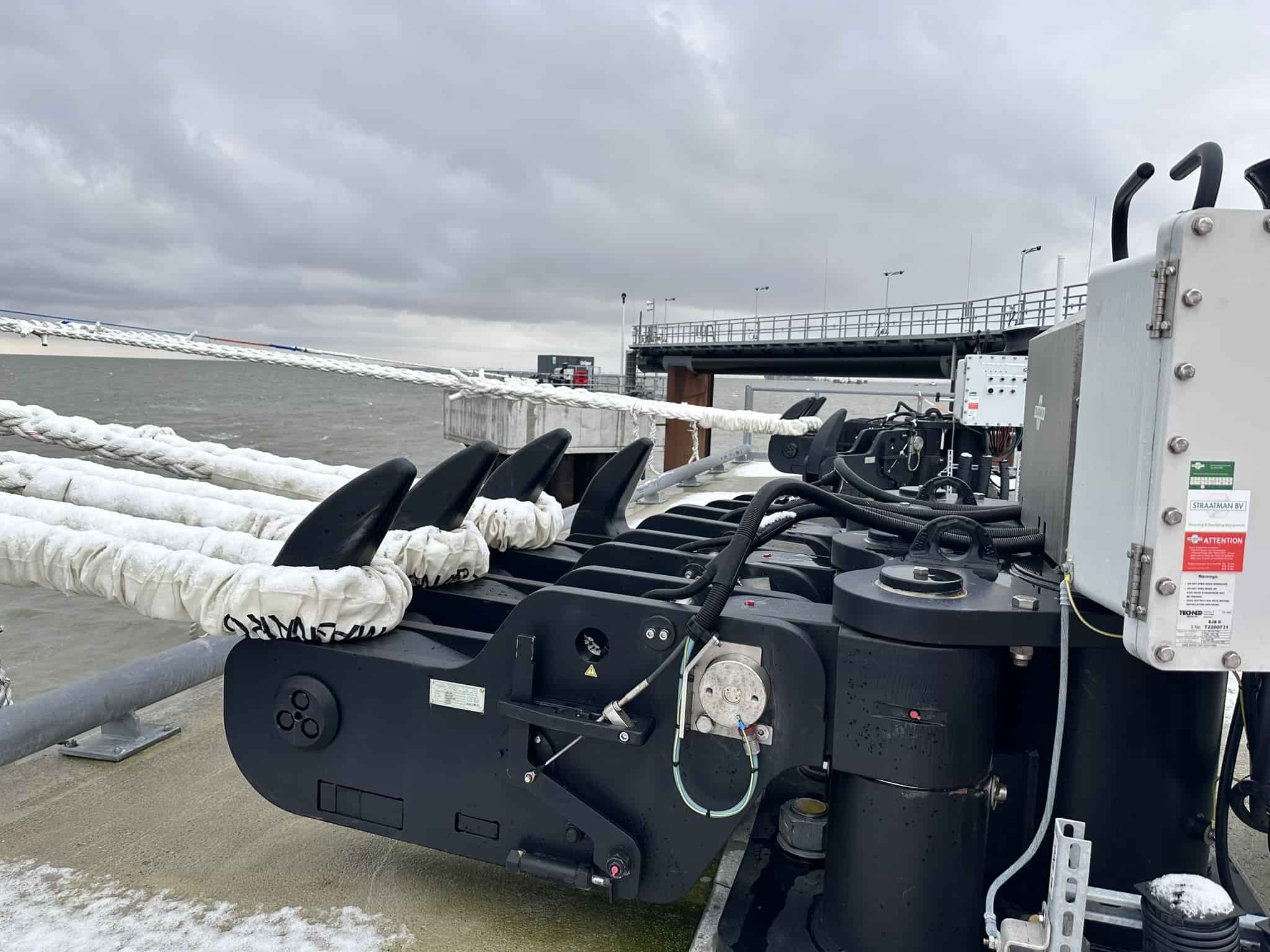
Quick release mooring hooks are mooring equipment installed on jetties, terminals or offshore structures to secure mooring lines and allow their quick and controlled release when the operation requires it.
Their main function is to provide safe mooring and, when the operation requires it, to release the lines quickly, in a controlled and safe manner, even under load, reducing risks for personnel, the vessel, the jetty and the operation.
SETI provides quick release mooring hook solutions for hydrocarbon, gas, LNG, chemical and port terminals, supporting technical specification, supply, installation, commissioning and after-sales support according to the operating conditions of the jetty.
Quick release mooring hooks can be supplied in different configurations according to the jetty design, mooring loads, number of lines, vessel type and terminal operating criteria.
Typical configurations include single, double, triple and quadruple hook units, as well as special systems for specific applications. They can also incorporate an integrated winch, remote control system, mooring load monitoring, rope keepers, adapted bases and components suitable for classified areas.
Depending on the selected configuration, standard units can cover typical safe working loads from 40 to 200 metric tons per hook.
Quick release mooring hooks can be configured with manual, electric or electrohydraulic release, according to the operating philosophy, the required level of automation and the safety conditions of the terminal.
Remote release makes it possible to operate the hooks from a safe location, such as a control room or remote panel, reducing personnel exposure during critical situations.
In all cases, the configuration must be defined considering the safe working load, operating procedures, emergency response and integration requirements with other jetty systems.
Complete our technical form or contact us for an initial project review.
The mooring load monitoring system makes it possible to measure and display the forces applied to the mooring lines.
This information helps detect overload situations, slack lines or unbalanced mooring conditions, allowing the operator to take preventive action before a critical situation occurs.
Monitoring can be performed locally or remotely, and can be integrated with control systems or operating software according to the architecture defined for the project.
In certain operating conditions, there is a risk that the mooring line may move or come off the hook, especially in applications with movement, swell or dynamic load changes.
For these cases, the hooks can incorporate rope keepers, designed to help keep the line correctly positioned on the hook during operation.
The need for rope keepers must be evaluated according to the type of vessel, mooring geometry, environmental conditions and operating philosophy of the jetty.
Quick release mooring hooks are part of the operating and safety system of an industrial jetty.
They can be conceptually integrated with Marine loading arms, gangway access systems for vessels, berthing aid systems, ship-to-shore link, environmental monitoring systems and terminal operating procedures.
Correct specification makes it possible to improve mooring safety, emergency response and coordination between loading, unloading, access and communication operations with the vessel.
Quick release mooring hooks can incorporate an integrated vertical winch to facilitate the recovery and handling of mooring lines during operation.
This option makes it possible to improve ergonomics, reduce personnel effort and speed up mooring and unmooring maneuvers on industrial jetties and port terminals.
The need for an integrated winch must be evaluated according to the type of vessel, jetty layout, frequency of operation and terminal mooring procedures.
In hydrocarbon, chemical, gas or LNG terminals, quick release mooring hooks can be specified with components suitable for classified areas when the project conditions require it.
The selection of panels, electrical systems, sensors, alarms and accessories must be carried out considering the area classification, the product handled, the applicable regulations and the terminal’s safety philosophy.
Depending on the project requirements, components compliant with ATEX, IECEx or other applicable criteria for environments with risk of explosive atmospheres can be evaluated.
Quick release mooring hooks are mooring equipment installed on jetties, terminals or offshore structures to secure mooring lines and allow their quick and controlled release when the operation requires it.
They are used to improve mooring safety in port, oil, chemical, gas and LNG terminals, allowing mooring lines to be operated with greater control and providing a rapid response in emergency situations.
Yes. Quick release mooring hooks are designed to release mooring lines in a controlled manner even under load, within the rated capacity defined for each hook.
Quick release mooring hooks can be supplied in single, double, triple, quadruple or special configurations, according to the number of mooring lines, safe working load and jetty design.
It is a system that measures and displays the forces applied to mooring lines, helping detect overloads, slack lines or unsafe mooring conditions.
Yes. They can be specified with remote release from a local panel, control room or integrated system, according to the terminal’s operating and safety philosophy.
Yes. They can be specified with electrical components, panels, sensors and accessories suitable for classified areas when installed in environments with risk of explosive atmospheres.
Data such as jetty location, number of units, hook type, safe working load, mounting structure, operating angles, area classification, need for winch, remote control and load monitoring are required.
 EN
EN  ES
ES  FR
FR