Digitize the coordination between terminal, vessel, agent, surveyor and trader in a single platform designed for the optimization of marine operations for bulk liquids, in a safe and standardized way
As a manager and/or operator of a marine terminal, you constantly strive to ensure safety and quality in operations and to comply with national and international regulations, while increasing the operational performance of your marine terminal and optimizing efficiency.
With the use of our platform for optimization of marine operations for bulk liquids, you will significantly improve your operation, making it more efficient, safer and more profitable.
The total stay in port will be shortened, your ecological footprint will be reduced, your administrative and communication workload will be relieved, and your operation will not only be better prepared, but also prepared further in advance.
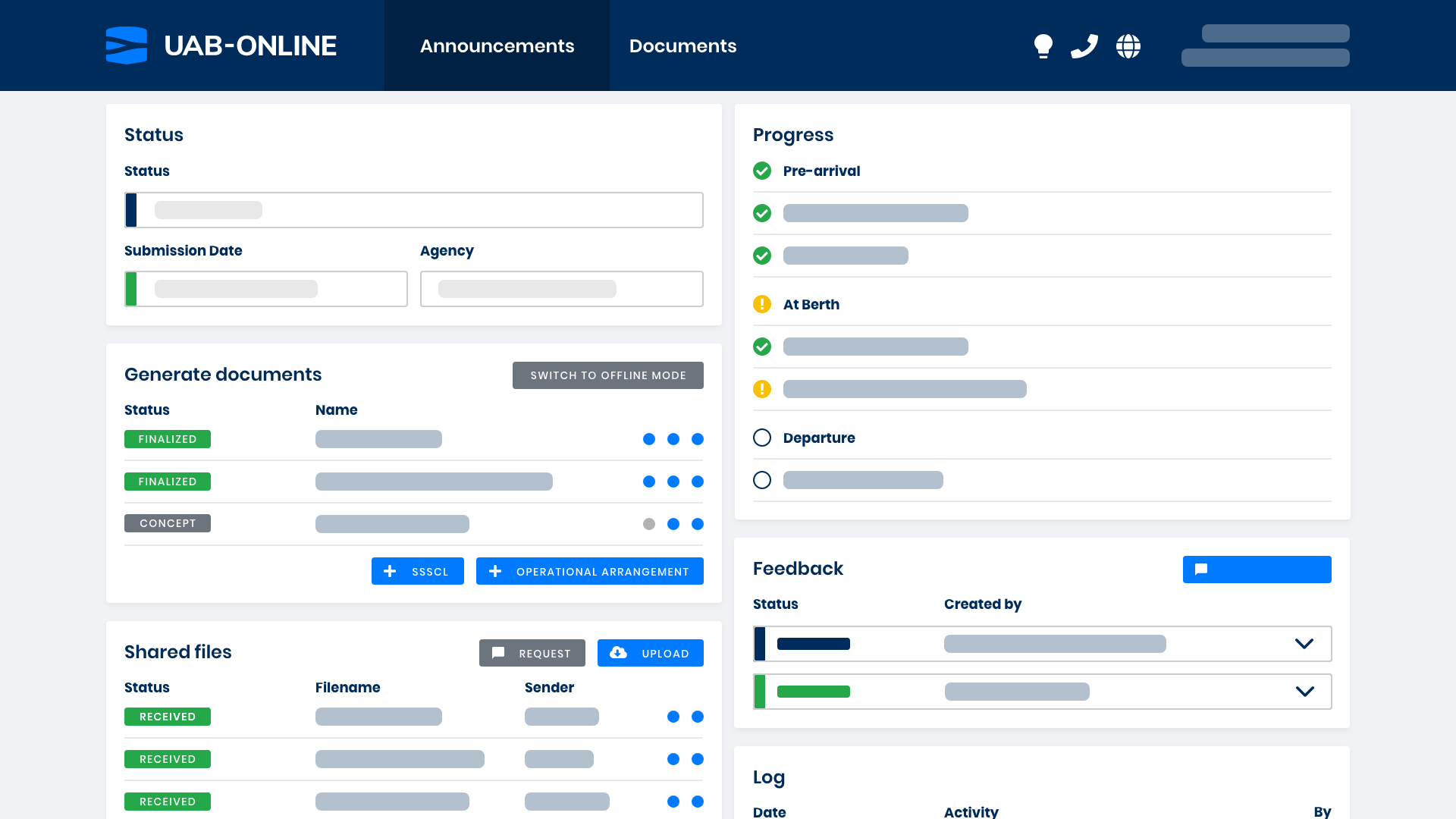
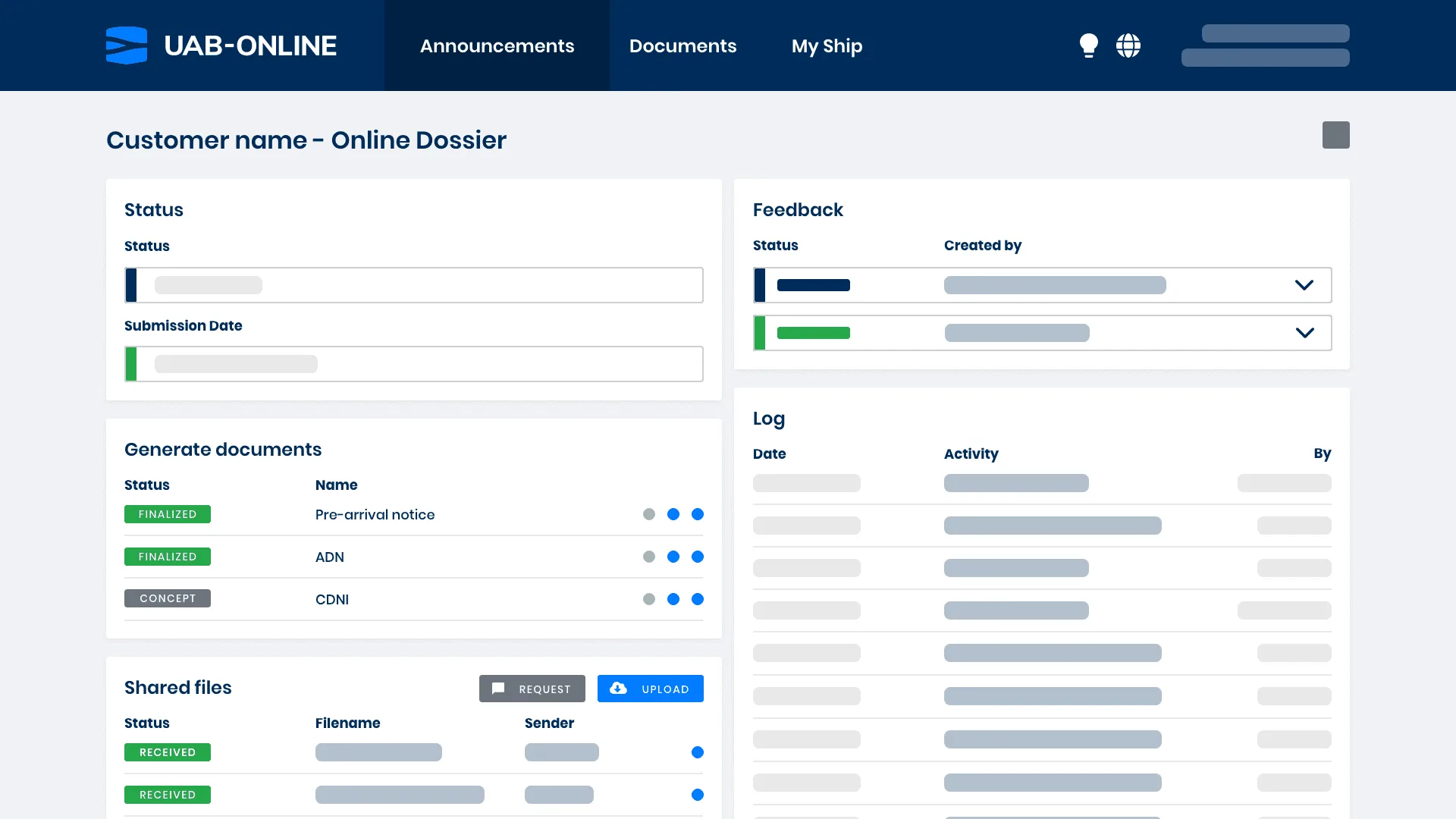
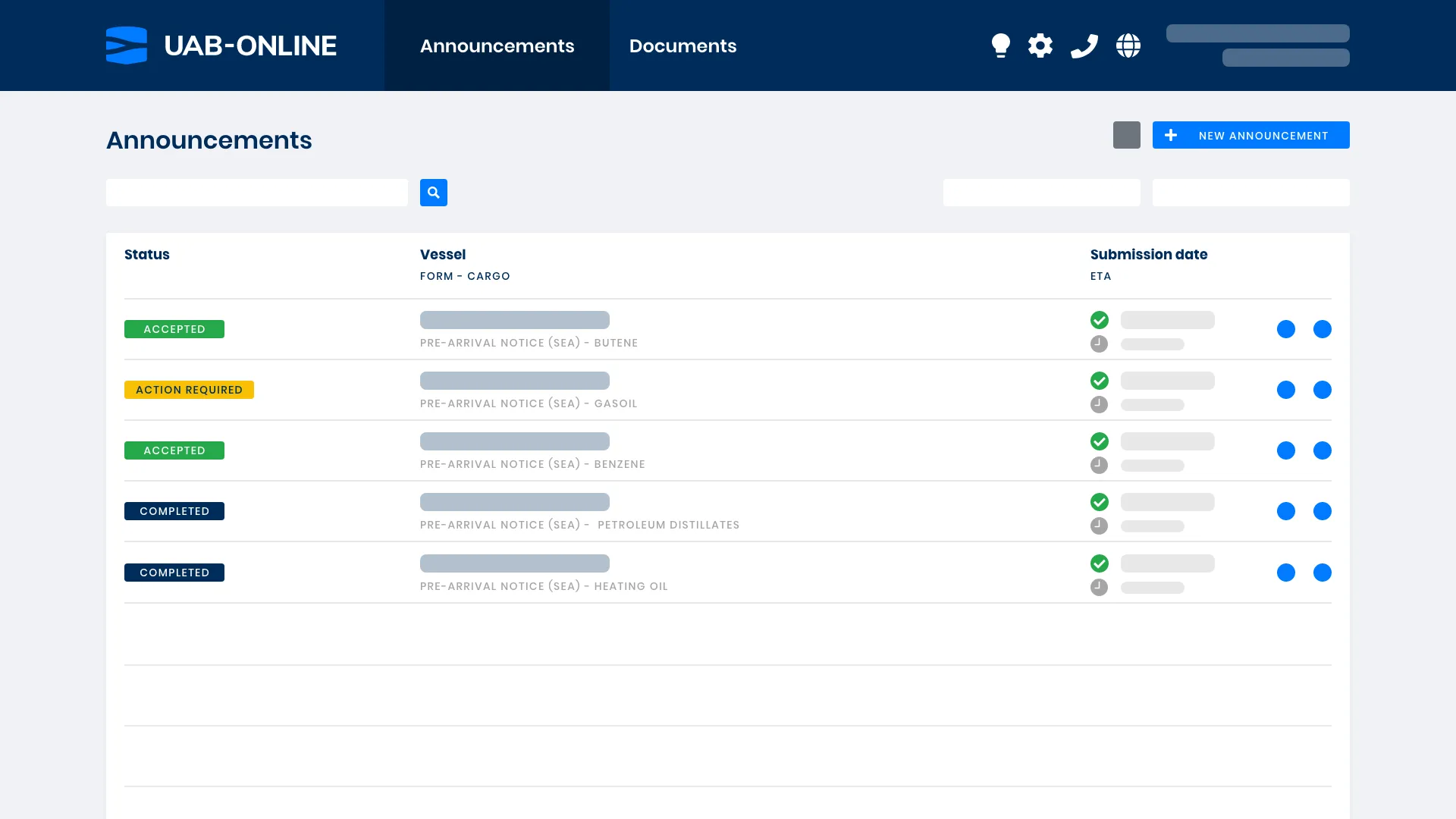
UAB-Online connects all actors of the marine operation in a single digital platform for optimization of bulk liquid operations, centralizing information, documents, checklists, communications and events in real time.
Fewer emails, fewer calls, fewer errors and more operational efficiency for your terminal.


All operation information in a digital dossier accessible to authorized users
Manage questionnaires and documentation prior to arrival to be better prepared for each operation
Digitalize operational checklists and documents (NoR, DOI, DOS, ISGOTT and more) in a simple way
Share documents securely and reduce manual sending by email
Greater visibility of the status of each visit for better coordination between all actors
Record events, times and operational activities with complete traceability
Reduce work peaks and rework before the vessel’s arrival
Information is available in the platform for all actors
Digital forms and workflows that reduce errors and omissions
Everyone works with the same updated information in real time
Less waiting, fewer delays and fewer last-minute disruptions
Structured records that facilitate audits and operational compliance
Avoid last-minute disruptions and operate with peace of mind
Everyone works with consistent information and standardized documents
The highest adoption among vessels, surveyors and agents worldwide
Meet requirements without surprises and avoid administrative overload
Implementation and continuous support for uninterrupted operations
Solutions designed by professionals who understand your operation
See also other products related to Jetties: marine loading arms, gangway access systems, berthing aid systems, quick release mooring hooks, and ship-to-shore link.
A digital vessel call dossier is an online file that centralizes the information, documents, forms, checklists, communications and records related to the arrival, operation and departure of a vessel at a terminal. It allows the terminal and other authorized stakeholders to work from the same updated information base.
In liquid bulk operations, a digital platform can help organize checklists and documents related to international safety best practices, including forms and controls associated with ISGOTT 6, when applicable to the type of operation and the terminal’s procedures.
Yes. Depending on the project scope, integration with internal systems can be evaluated through APIs or other mechanisms. This helps avoid double data entry, reuse existing information and connect the digital vessel call dossier with the terminal’s internal processes.
An API allows data to be exchanged between the maritime operations platform and other terminal systems. It can be used to retrieve information or files from the dossier, link orders or vessel calls, and use existing data from internal systems in operational forms or documents.
For operations management, it provides greater visibility over the status of each vessel call, timings, pending tasks, documents, stakeholders involved and potential bottlenecks. It can also help analyze performance, compare indicators and identify improvement opportunities.
Standardization makes it possible to apply best practices, facilitate training, compare indicators, reduce operational variability, improve compliance and maintain a common way of working across different terminals, even when each site retains its own operational specificities.