A Ship-to-Shore Link is a communication and safety system that connects the vessel with the terminal to transmit critical signals, especially emergency shutdown signals during transfer operations.
Its main function is to allow safe communication between the vessel safety system and the terminal safety system, especially for the transmission of emergency shutdown signals, or ESD, during loading and unloading operations.
SETI provides Ship-to-Shore Link systems for LNG terminals, FSRU, FLNG, hydrocarbon terminals, chemicals and marine operations, supporting technical specification, supply, installation, commissioning and after-sales support according to the requirements of each project.
Ship-to-Shore Link systems are used in operations where it is necessary to maintain safe, reliable and standardized communication between the vessel and the onshore facility.
They are especially important in LNG terminals, ship-to-ship operations, FSRU, FLNG, hydrocarbon terminals, chemicals and other marine operations where coordination between vessel and terminal is critical for safety.
In LNG applications, the Ship-to-Shore Link is a key element for safe product transfer, as it allows emergency signals, operational communications and critical data to be coordinated between both parties.
One of the main functions of the Ship-to-Shore Link is to allow the transmission of ESD signals between the vessel and the terminal.
When the vessel or terminal safety system detects a critical condition, the link allows a synchronized emergency shutdown to be coordinated, reducing risks for personnel, the vessel, the terminal, the product being transferred and the environment.
The system configuration must be defined according to the project safety philosophy, the requirements of the vessel, the terminal, the existing control systems and the applicable standards.
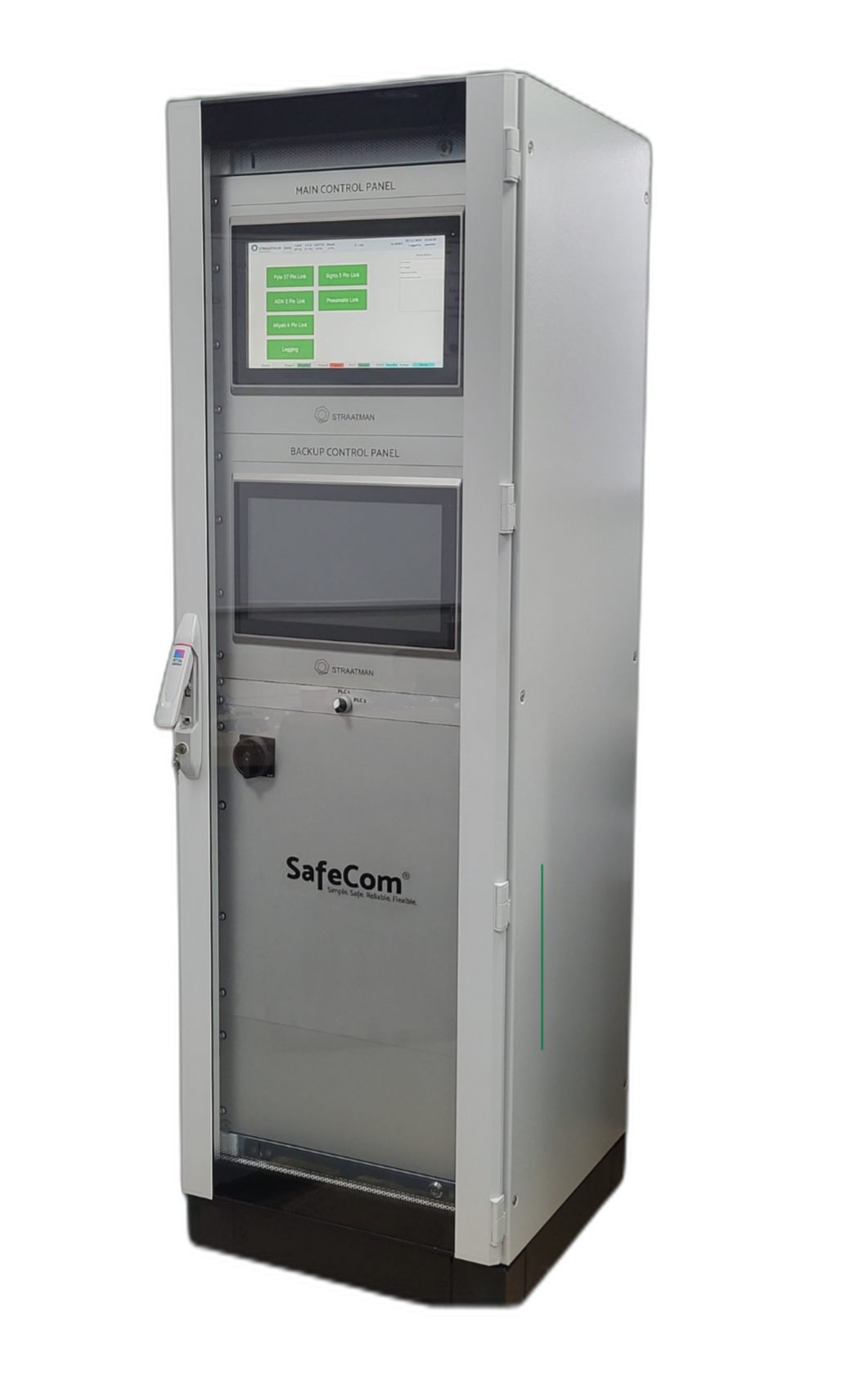
Contact us for an initial project review and selection of the appropriate configuration.
A Ship-to-Shore Link system can be configured with different types of links according to the type of vessel, terminal, operation and required standard.
Configurations may include fiber optic links, electrical links, pneumatic links, hotphone, connection boxes, portable or fixed reels, test equipment and associated accessories.
Common configurations include fiber optic links, multipin electrical connections, pneumatic links, grounding links, SIGTTO-type connections and other interfaces used in LNG, hydrocarbon or chemical operations.
The hotphone is a dedicated communication line between the vessel and the terminal, designed to maintain direct contact during the operation.
This communication makes it possible to coordinate maneuvers, confirm operating status, manage emergency situations and maintain clear communication between both parties during product transfer.
In LNG projects, the hotphone is part of the critical communication interface between vessel and terminal, and must be specified considering compatibility, reliability, environmental conditions and operational requirements.
Ship-to-Shore Link systems are specified considering international standards, guidelines and practices applicable to the ship-shore interface, especially in LNG operations.
Depending on the project, requirements associated with ISO 28460, ISO 20519, SIGTTO, SGMF and other criteria applicable to safe product transfer between vessel and terminal may be considered.
Correct specification makes it possible to improve compatibility between vessels, terminals and third-party systems, reducing incompatibility risks during international operations.
The Ship-to-Shore Link is part of the critical safety and operating systems of an industrial jetty.
It can be conceptually integrated with Marine loading arms, quick release mooring hooks, berthing aid systems, gangway access systems for vessels and terminal operating procedures.
Correct specification makes it possible to improve coordination between product transfer, operational communication, emergency shutdown, mooring, berthing and the overall safety of the terminal.
In LNG terminals, the Ship-to-Shore Link plays an especially critical role due to the safety requirements associated with the transfer of liquefied natural gas.
The system makes it possible to coordinate emergency shutdown signals, operational communication, critical data and compatibility between the vessel and the terminal, contributing to a safe, standardized operation in accordance with international industry practices.
It can be used in onshore LNG terminals, FSRU, FLNG, bunkering operations, small scale LNG and other configurations where a safe interface between vessel and shore is required.
In FSRU, FLNG or special configuration projects, the Ship-to-Shore Link may require an architecture adapted to the specific interfaces between vessel, floating unit, terminal and control systems.
The configuration may include independent modules for different interfaces, backup systems, integration with mooring monitoring, data communication and compatibility with existing onboard or onshore systems.
SETI can support the definition of the appropriate architecture according to the type of operation, existing equipment, ESD philosophy, vessel configuration and project integration requirements.
A Ship-to-Shore Link system can include different components depending on the operation and the project scope.
Common components may include:
A Ship-to-Shore Link is a communication and safety system that connects the vessel with the terminal to transmit critical signals, especially emergency shutdown signals during transfer operations.
It is used to coordinate communication between the vessel and the terminal, transmit ESD signals, improve operational safety and ensure a synchronized response to critical conditions during product transfer.
In LNG operations, the Ship-to-Shore Link is a critical element of the ship-shore interface and is specified considering international standards and guidelines applicable to the safe transfer of liquefied natural gas.
It can transmit ESD signals, safety status, operational communication, critical data, electrical link signals, fiber optic signals, pneumatic signals or specific interfaces depending on the project configuration.
The hotphone is a dedicated communication line between the vessel and the terminal, used to maintain direct and reliable contact during the transfer operation.
It can include fiber optic links, electrical links, pneumatic links, hotphone, connection boxes, portable or fixed reels, umbilical cables and test equipment.
Yes. Ship-to-Shore Link systems can be configured for onshore terminals, FSU, FSRU, FLNG, bunkering, small scale LNG and special projects where a safe interface between vessel and terminal is required.
Data such as product type, vessel type, ESD philosophy, applicable standards, existing onboard and onshore systems, required connection type, cabinet location, cable distance, spare parts and testing needs are required.
 EN
EN  ES
ES  FR
FR